
Building collective power with small farmers and the urban poor through community kitchens + community gardens
Food Today, Food Tomorrow is a coalition of small farmers, urban poor growers, community organizers, food justice activists and advocates, and volunteers working collectively toward:
Access to good food
By providing community kitchens fresh organic produce grown ethically and ecologically by small farmers.
Food gardens
for all
By training urban poor growers to sustain their own food gardens and become farmer-trainers themselves.
Bahay kubo biodiversity
By growing agrobiodiverse gardens through a model of solidarity gardening, rooted in agroecology and advocating for the rights of peoples.
Our collaborators & supporters who have sustained and continue to sustain us—Good Food Co., Me & My Veg Mouth, The Vegan Neighbors, Project Pulo, Kids for Kids, Gantala Press, Toyo Eatery, Gallery by Chele, Margarita Fores, Astig Vegan, Sulong Likha, Headshot Clinic, Uber Philippines, Mary Ruth Organics, BestPak, Ugnayan Cards, and many more like-minded Civil Service Organizations and individual volunteers.
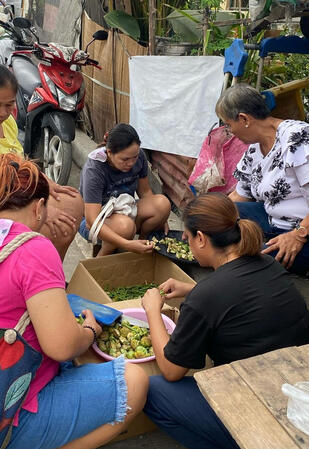
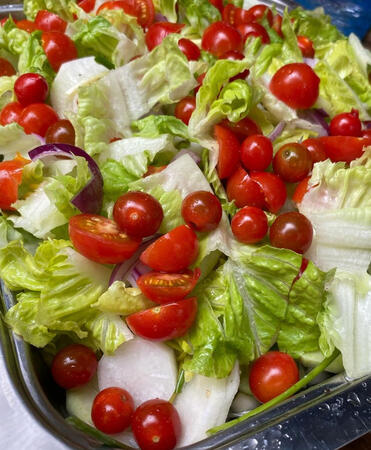
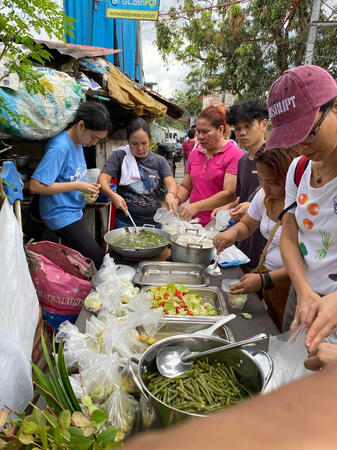
Food Today:
Community Kitchens
Every week, we deliver fresh organic produce to community kitchens (Kusinang Bayan) led and organized by the members of Pinagkaisang Lakas ng Mamamayan (PLM). Currently, the Kusinang Bayan is held at the barangays of Payatas-Molave, Bagong Silangan, Tatalon, and San Isidro.
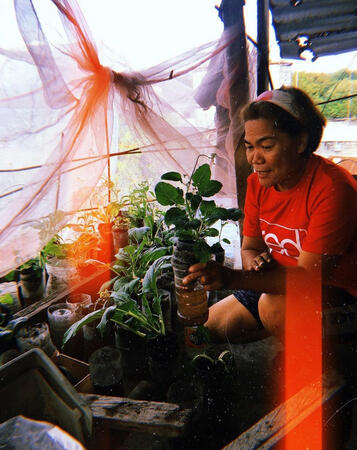
Food Tomorrow:
Community Gardens
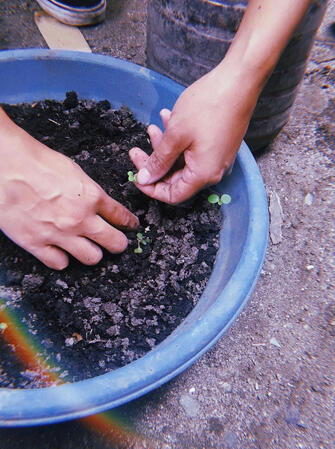
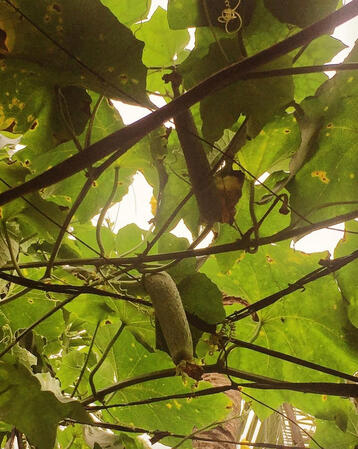
We train and support urban poor communities who want to grow their own food gardens through agroecological farming workshops. Our dream is to make urban food gardens as common as sarisari stores.
Join the movement
Support our weekly Kusinang Bayan or community kitchens by pledging Php 150/month.
Sustain our Food Gardens by checking our resource map for some of the items we need.
Join a Kusinang Bayan or start your own fundraising campaign!
"It is only on our own that we experience scarcity. In this interconnected and interdependent world, together we have everything we need. When our work and our lives are rooted in that core assumption, we are being the world we want to see. And that is when magic can happen." - On Collective Enoughness (creatingthefuture.org)
Our Roots
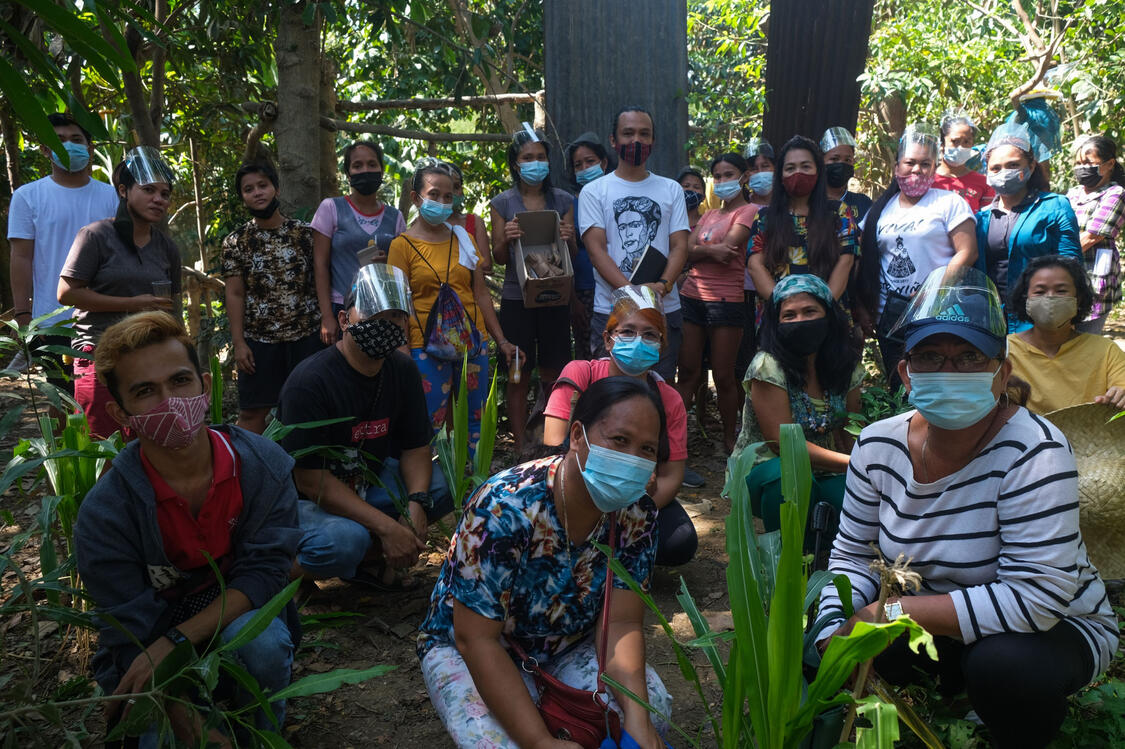
Food Today, Food Tomorrow is borne of the multiple crises that the urban poor face in Metro Manila during the COVID19 pandemic.Despite the systemic hardships and deprivation that the urban poor faced, violent evictions and displacement continued. These days prices are skyrocketing, joblessness has increased, agriculture is buckling under the climate emergency, and the threat of a food crisis looms.Food Today, Food Tomorrow recognizes the broader context within which the problem of food insecurity plays out–a world where the economic, social, and political rights of the urban poor are neglected, where their agency and power over their lives are persistently undermined. Our task is to highlight the urban poor’s agency and capacity when treated with dignity and fairness and when given with the right resources.Food is essential to our ability to survive and thrive in this age of emergency. Not just any food though. We need food that is safe, nutritious, delicious, and affordable. Food that is fair and just, and does not exploit the labor that brings it to our plates.
How We Started
Food Today started as Lingap Maralita, a food relief project that we put together with friends and volunteers during the early days of the pandemic. As the world’s longest and strictest lockdown was enforced, millions of low-income households with no savings to rely on and lived a hand-to-mouth existence did not know where their next meal would come from. “Mas mauna pa kaming mamatay sa gutom kaysa sa virus” was the widespread sentiment of the country’s poor. Some were forced to violate lockdowns so that they could feed themselves and their families, and were violently dispersed and arrested.Lingap Maralita was an immediate response to the growing hunger and delay in aid that we were seeing all around. With widespread support from citizens all over the country, what we envisioned as a one-week food relief activity ran for 15 weeks. Local rice and fresh organic produce were sourced from small farmers who suddenly saw their markets closing and were distributed to 500 urban-poor households every week. Leaders and mothers from the urban poor communities led the Kusinang Bayan (community kitchen) to show that the poor, despite lacking in resources, have something to contribute to the project. In fact, because of the Kusinang Bayan, sometimes the project exceeded its weekly target number of households.Food Today continues the early work of Lingap Maralita and is powered by Solidarity Share, a way for Filipino families with the means and social safety nets to support families with very limited means and little to no social protection by purchasing farm shares at a subsidized rate.Food Tomorrow started when leaders of PML - Payatas expressed their interest in a more sustainable way to secure food–by growing it themselves. Like a lot of urban poor, some of them were either farmers who migrated to the city in search of a better life or had experience growing food but found the cost of seeds and soil prohibitive, and the lack of viable space in Payatas discouraging.Food Tomorrow provides participating households with a garden starter kit that includes organic soil, vermicompost, shade nets, seeds, and cuttings of organic vegetables. It also offers training and guidance on urban food gardening over a 16-week program on urban agroecology including topics on plant health and soil nutrition, composting, seed saving, organic plant concoctions, and healthy food preparation.Food Tomorrow promotes the use of agroecology. More than a way to grow food in a manner that is holistic and regenerative, agroecology is a socio-political movement that connects these production principles and practices to the broader goal of systemic change.Agroecology recognizes the specific environment, struggles, and experiences of food producers and how it places importance on the practical, appropriate, and collective. The community of practice in the urban poor communities creates a body of knowledge and practice on urban agriculture that is responsive to the realities and constraints of the urban poor. It is, as La Via Campesina says, “a tool for the collective transformation of reality.”